

Product Code: 2.2040
Neutronco
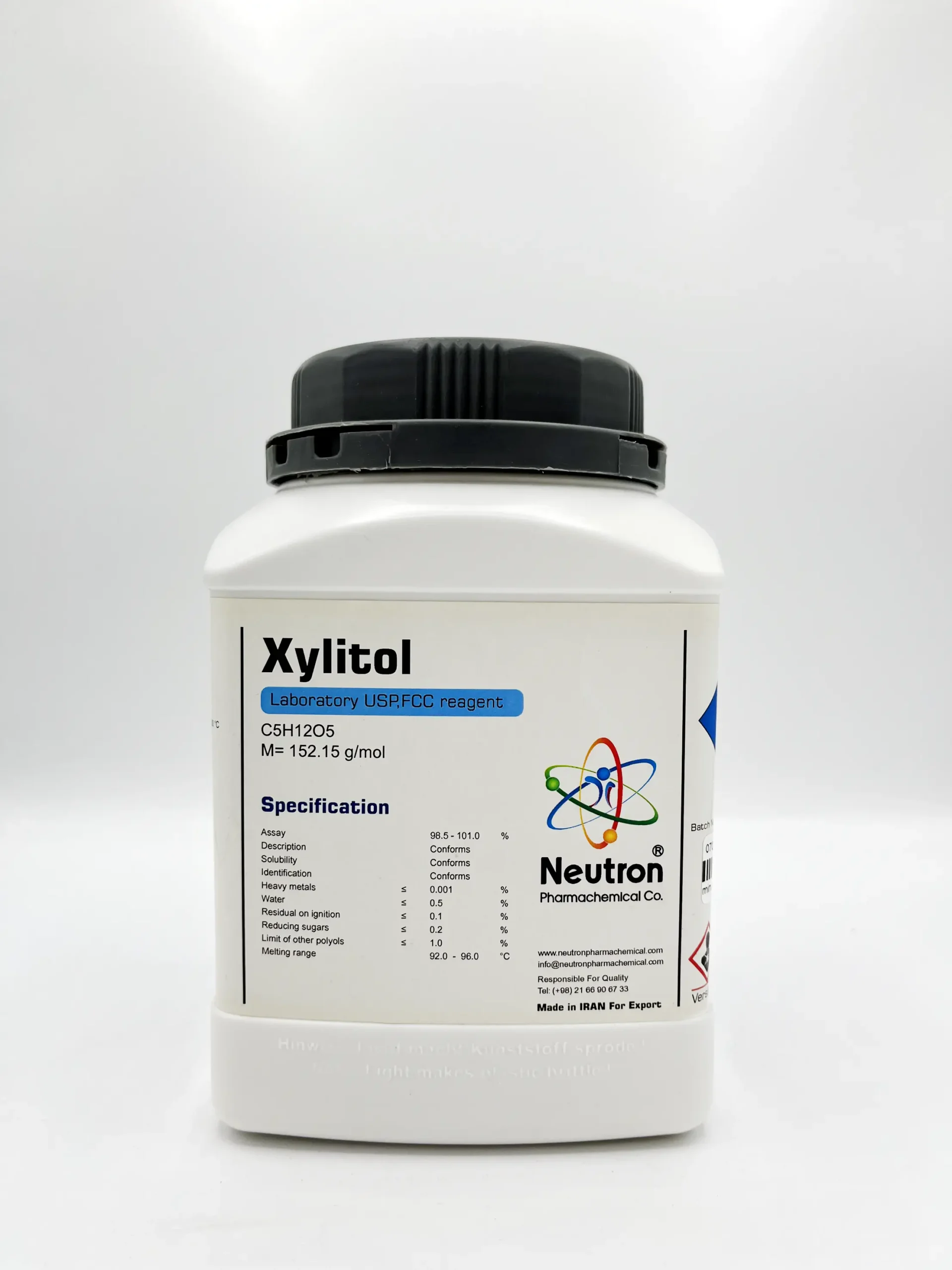
Xylitol
Formula
Molar Mass
CAS Number
HS Code
Uses
| Formula | C5H12O5 |
| Chemical formula | C5H12O5 |
| Molar mass | 152.15 g/mol |
| CAS number | 87-99-0 |
| Storage | Store at 15 to 30 °C |
| SDS | available |
| Odour | odourless |
| Form | solid |
| Color | white |
| Melting point | ~ 95°C |
| Assay | 98.5 – 101.0 | % | |
| Description | Conforms | ||
| Solubility | Conforms | ||
| Identification | Conforms | ||
| Heavy metals | ≤ | 0.001 | % |
| Water | ≤ | 0/5 | % |
| Residual on ignition | ≤ | 0/1 | % |
| Reducing sugars | ≤ | 0/2 | % |
| Limit of other polyols | ≤ | 1 | % |
| Melting range | 92.0 – 96.0 | °C |
Xylitol is a naturally occurring sugar alcohol found in small amounts in fruits and vegetables like plums, strawberries, cauliflower, and pumpkin. Unlike most sugar alcohols, xylitol is achiral due to its symmetrical structure.
🏭⚗️ Production
Xylitol is primarily produced from lignocellulosic biomass (e.g., wood, corn, wheat, rice residues). The process involves:
1. Extracting xylan from biomass
2. Acid hydrolysis to form xylose
3. Purification via chromatography
4. Hydrogenation of xylose to xylitol using a Raney nickel catalyst
Fermentation using yeast (e.g., Candida tropicalis) is another method, though less economical. The U.S. Department of Energy identifies xylitol as a top value-added product from biomass, with a projected market of $1.41 billion by 2025.
🧪 Uses
Used as a sugar substitute in gum, toothpaste, supplements, and pharmaceuticals
Low impact on blood sugar; insulin-independent metabolism
Added to nasal sprays for sinus relief
Used in cooling fabrics to create a refreshing sensation when in contact with moisture